Opening day is circled on the calendar. Your stand is hung. Your bow is tuned or your rifle is sighted in.
But when’s the last time you really looked at your knife?
For a lot of hunters, the answer is “last season.” The knife went back in the sheath, the sheath went in the gear bin, and nobody thought about it again. Until the moment it counts.
Don’t let that be you. Here’s a simple pre-season checklist to get every blade field-ready before you head out.
Why Pre-Season Knife Prep Matters
You can do everything right. Scout for weeks. Make a perfect shot. Then spend an hour fighting a dull knife in the cold and the dark.
A dull hunting knife causes real problems:
- It’s slower: Field dressing takes longer when you’re sawing instead of slicing. That’s more time in the field, often in bad light and worse weather.
- It’s messier: A dull blade tears hide and can nick things you don’t want to nick. Clean cuts mean cleaner meat.
- It’s more dangerous: Dull knives take more force. More force means more slips. And a slip with cold, wet hands is how hunters get hurt.
A sharp knife fixes all three. And the best time to sharpen it is now, at home, with good light and no pressure.
The Pre-Season Hunting Knife Checklist
Work through this list a week or two before your season opens. It takes less than an hour.
1. Gather Every Knife You’ll Use
Don’t just grab your favorite fixed blade. Round up everything that will touch game this season:
- Your main hunting knife: Fixed blade or folder, whatever you carry for field dressing.
- Skinning and caping knives: If you do your own skinning or plan to cape a trophy.
- Your backup knife: Because the day you forget it is the day you need it.
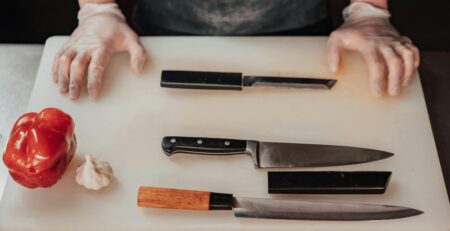
- Processing knives: Boning knives, butcher knives, and kitchen knives you’ll use to break down meat at home.
2. Inspect for Damage
Look closely at each blade in good light. Check for:
- Chips and nicks: Common after last season’s bone work or a fall on a rock.
- Rolled edges: Run your eye along the edge. Shiny spots or glints mean the edge has folded over.
- Rust and pitting: Especially on carbon steel knives or blades stored in leather.
- Loose handles or pins: A handle that shifts is a safety problem.
- Folder locks and pivots: Open and close your folding knife. The lock should engage firmly and the pivot should move smoothly.
3. Clean and Dry Everything
Old blood, fat, and dirt from last season can hide rust and dull the edge. Wash each knife with warm soapy water, then dry it completely.
For carbon steel blades, add a light coat of oil to protect against rust. For folders, blow out any grit from the pivot and add a drop of lubricant.
4. Give Each Blade a Full Sharpening
This isn’t the time for a quick touch-up. Give every knife a complete sharpening so it starts the season at its best.
Here’s how to choose your angle:
- 20 degrees: Great for skinning and caping knives where you want a finer, keener edge.
- 25 degrees: Ideal for general field dressing and camp chores. A tougher edge that holds up to hide, cartilage, and joints.
Pick an angle that matches your knife and stick with it every time you sharpen. Not sure what your knife needs? Our knife sharpening angle guide can help.
With a guided sharpener like the Warthog V-Sharp, the process is simple. Set your angle, rest the blade against the guide, and pull it through from heel to tip with light pressure. The diamond hones sharpen both sides at once, so the edge comes out even every time.
5. Don’t Forget Serrated Edges
Many hunting knives have a partially serrated section. Those serrations need a different approach than a straight edge.
Warthog’s ceramic hones fit the A4, Elite A4, and Classic II and are designed specifically for serrated blades. Sharpen the straight edge with your diamond hones, then switch to ceramic for the serrations.
6. Check Your Sheaths and Cases
A sheath protects your edge, but only if it’s in good shape.
- Leather sheaths: Check for cracks, loose stitching, and dampness. Leather holds moisture, which can rust your blade.
- Plastic and nylon sheaths: Look for cracks and make sure the retention still holds the knife securely.
- Grit inside the sheath: Dirt and sand trapped inside will dull your edge every time you draw the knife. Clean it out.
7. Pack a Field Sharpener
Even the best edge won’t last through a whole season, or sometimes a whole animal. Pack a compact sharpener so you can touch up in camp.
The Warthog V-Sharp Curve is built for this. It’s compact, lightweight, and set at a fixed 25-degree angle, so there’s nothing to adjust. Just pull the blade through and get back to work.
If you have room in the truck or camp, a V-Sharp A4 or Classic II gives you more angle options for every knife in your kit.
8. Bowhunters: Check Your Broadheads
If you shoot fixed-blade broadheads that can be resharpened, prep them now too. Warthog’s Multi-Edge sharpener offers infinite angles from 10 to 90 degrees and is built to handle broadheads along with chisels, scissors, and other tools.
Always follow your broadhead manufacturer’s guidance. Many replaceable-blade heads are meant to have their blades swapped rather than sharpened.
Field Sharpening Tips
A few habits make sharpening in the field faster and safer:
- Sharpen at camp, not mid-job: If possible, touch up your knife before you start field dressing, not halfway through with cold hands.
- Clean the blade first: Wipe off blood and fat before sharpening. Residue clogs your hones and slows everything down.
- Use light pressure: Let the sharpener do the work. Pressing hard doesn’t sharpen faster.
- Keep the same angle: Match the angle you used at home so you’re maintaining the edge, not reshaping it.
- Wipe the sharpener down after: Keep your hones clean for the next use.
After the Season: Don’t Skip This Step
Most hunters prep before the season. Very few take care of their knives after it. That’s why so many blades come out of storage rusty and dull.
When your season wraps up:
- Clean every knife thoroughly: Remove all blood, fat, and debris.
- Sharpen before storage: Put your knives away sharp, so they’re ready next year.
- Oil carbon steel blades: A light coat prevents rust during months of storage.
- Store knives outside of leather sheaths: Leather holds moisture. Store blades dry and separate for the off-season.
Do this, and next year’s pre-season prep takes about ten minutes.
Your Quick Pre-Season Checklist
Here’s the whole list at a glance. Screenshot it, print it, or stick it in your gear bin:
- Gather every knife you’ll use this season
- Inspect for chips, rolled edges, rust, and loose handles
- Clean and dry every blade, and oil carbon steel
- Sharpen each knife fully at the right angle
- Handle serrations with ceramic hones
- Check sheaths for moisture, cracks, and grit
- Pack a compact field sharpener
- Prep resharpenable broadheads if you bowhunt
Hunting Knife Sharpening FAQs
What angle should I sharpen a hunting knife?
Most hunting knives do best between 20 and 25 degrees per side. Use 20 for skinning and caping. Use 25 for general field dressing and rough camp work.
How often should I sharpen my hunting knife during the season?
Give it a full sharpening before the season and touch it up whenever it starts to drag. Many hunters touch up after every animal, especially after working through joints and hide.
Can I use my kitchen knife sharpener on a hunting knife?
If it’s a guided, adjustable sharpener like the V-Sharp A4 or Classic II, absolutely. Just set it to the right angle for your hunting knife. Avoid cheap pull-through gadgets, which can chip or scratch a good blade.
Should I store my hunting knife in its leather sheath?
Not long-term. Leather absorbs moisture and can cause rust. It’s fine in the field, but store your knife dry and outside the sheath in the off-season.
Walk Into the Woods Ready
You put in the work all year. Scouting, practicing, planning. The last thing you want is for a dull knife to be the weak link in the chain.
If you’ve ever struggled to sharpen a hunting knife, you’re not alone. Freehand stones take years to master. Cheap sharpeners can damage your blade. And most hunters just don’t want to risk ruining a knife they trust.
Warthog makes sharpening simple. Set your angle, pull the blade through, and the V-Sharp system puts an even edge on both sides every time. No skill needed. No guesswork. That’s why hunters across the USA and Canada trust Warthog, the sharpener named World’s Best Manual Sharpener in 2017 and 2018.
Imagine opening day with every knife in your pack sharp, clean, and ready. When the moment comes, your blade does its job and you get to focus on yours.